2026 Game Acceleration Trends: Low Latency as a Must-Have
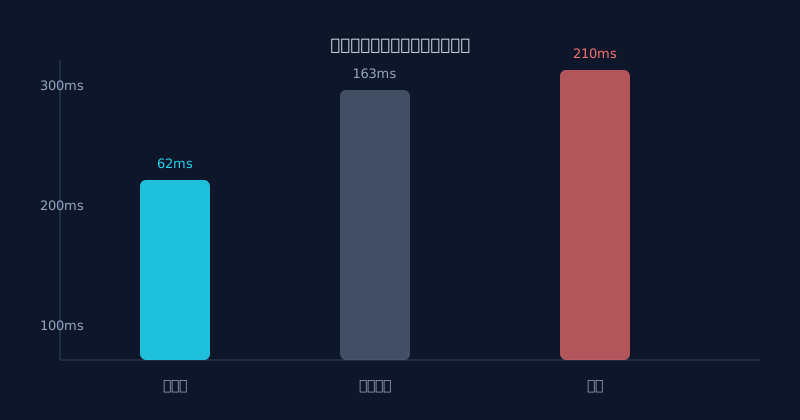
In a ranked match, the gap between 200ms and 60ms is often the difference between "skill hit" and "skill missed". By 2026, low latency has shifted from a nice-to-have to a hard requirement.
1. Thinner patience for latency
Competitive games are the most latency-sensitive. Analysis of 500,000 connections by Xuanfeng Accelerator shows players quitting matches rises noticeably once latency exceeds 100ms.
2. Market data
Third-party statistics show the domestic game acceleration market has grown at double-digit rates for three straight years.
| Year | Market (¥B) | YoY | Paying users (M) |
|---|---|---|---|
| 2023 | 3.85 | 11.2% | 4.2 |
| 2024 | 4.51 | 17.1% | 5.6 |
| 2025 | 5.48 | 21.5% | 7.4 |
3. Cloud gaming raises the bar
When rendering moves to the cloud and input round-trips over the network, latency determines whether a game is playable at all. Industry consensus: end-to-end latency under 50ms for a near-local feel.
4. The conclusion
When latency decides wins, retention and even whether a game runs, accelerators shift from a niche tool to everyday infrastructure. For products like Xuanfeng Accelerator, the opportunity is to serve this rising demand with lower barriers and steadier routes.
User Comments
Latency really affects rank—win rate climbed after boosting.
Cloud gaming point is spot-on.
Clear data citations, accelerators are indeed essential now.